
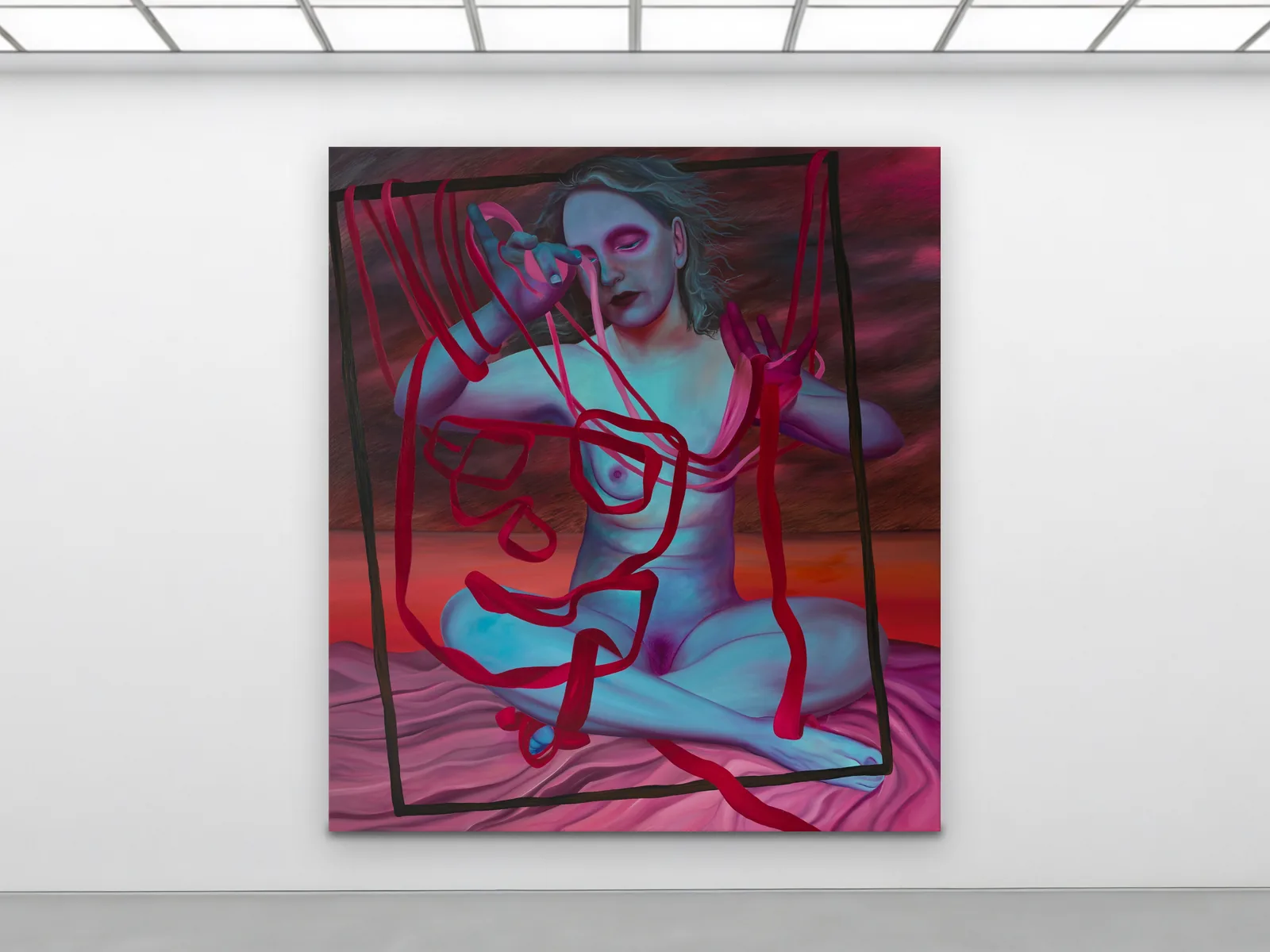
Elizabeth Wayland Barber once wrote about the theory of the "string revolution," which argues that the invention of cord and simple knots (around 30-50 thousand years ago) was as important as the discovery of fire or making the first stone tools. Of course, on the one hand, woven clothes allowed people to travel vast distances (for example, without Viking women there would have been no Viking expansion), but that's only part of the truth. The thing is that the traditional occupation of women, which was weaving, was actually like geometric pattern-making and developed people's brains so much that over time it became the basis for creating advanced computer networks and algorithms. I know it's not a very romantic story, but I have the feeling that you can see this ancient wisdom of weavers in Paulina's painting, weavers who intricately wove the future for themselves and their children.
The painter
Paulina Stasik (born 1990) studied painting at the Academy of Fine Arts in Krakow, taking her degree under Leszek Misiak in 2015 and her doctorate in 2020. In 2016 she won the Young Polish Painting competition in Warsaw. Her solo shows include Kamienna at Raster in Warsaw (2023), Elsewheres at UTA Artist Space in Los Angeles (2023) and Skin in the Game at Lyles & King in New York (2024).